
Best Automatic Fire Extinguisher for Garage in 2026: A Practical Buyer's Guide
0 Comments
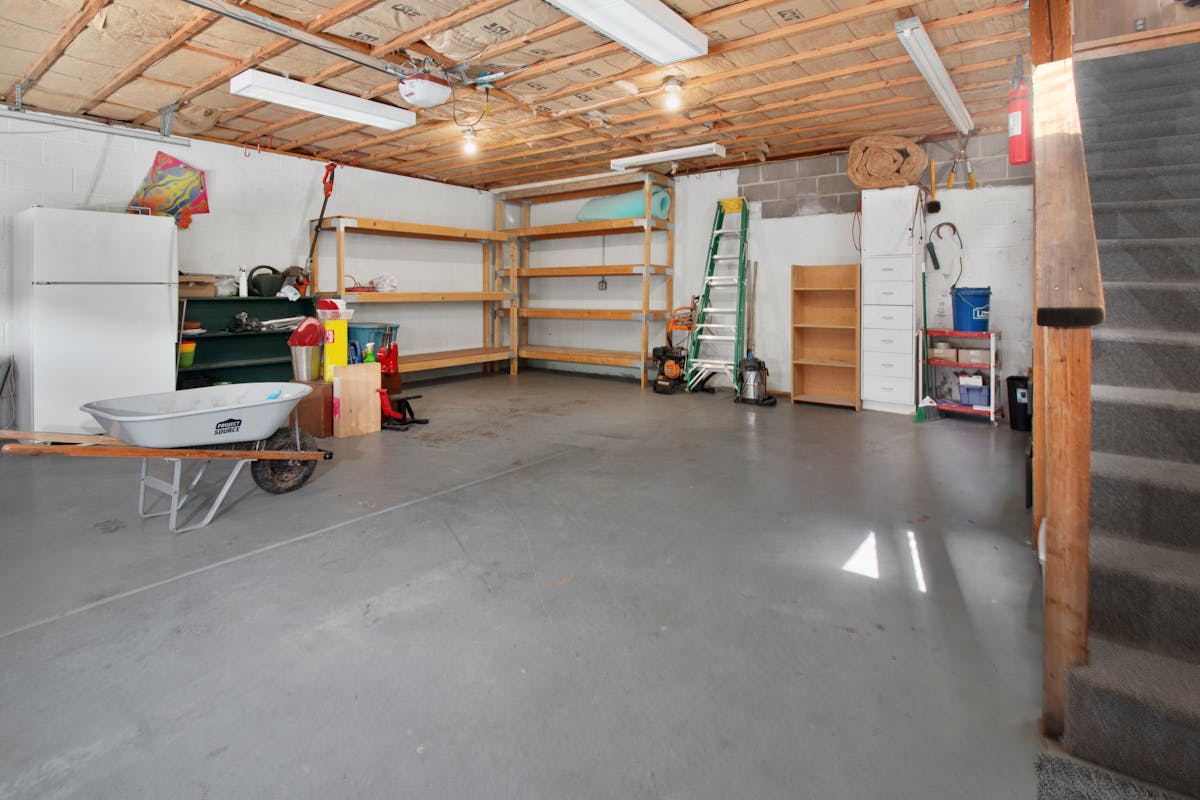
If you're shopping for the best automatic fire extinguisher for garage use in 2026, you've already done the smart thing — you've recognized that the garage is the most fire-prone room in the average American home. Gas cans, oily rags, lithium-ion batteries charging on the workbench, an electrical panel right behind the drywall, and a vehicle full of fuel and high-voltage electronics: it's a stack of ignition sources sitting under a roof that often has no smoke detector, let alone any active suppression.
This guide walks through what an automatic fire extinguisher actually does, how it compares to sprinklers and manual extinguishers, the features that matter when you're protecting a garage specifically, where to install it, and how to choose a unit that will still be working a decade from now. By the end you'll know exactly what to buy and where to put it.
Why Garages Are One of the Highest Fire Risks in the Home
According to the National Fire Protection Association (NFPA), U.S. fire departments respond to roughly 6,600 home fires that start in garages every year, causing about 30 deaths, 400 injuries, and over $700 million in direct property damage. Garage fires are worse than fires that start elsewhere: they spread faster, burn hotter, and are detected later because most garages don't have working smoke alarms inside them.
The reason is the mix of ignition sources concentrated in one room:
- Lithium-ion battery charging — e-bikes, electric mowers, power-tool battery banks, scooters, and increasingly, EV traction batteries. A single damaged cell can go into thermal runaway in seconds.
- Electrical panels and sub-panels — most homes have the main breaker box in the garage. Arc faults, loose neutrals, and aluminum branch wiring are common ignition points.
- Stored flammables — gasoline for the mower, propane tanks, paint thinner, motor oil, and aerosols.
- Oily rags — linseed oil, stain, and many motor lubricants can spontaneously combust if rags are left bunched up.
- Vehicles — a parked car contains 10–20 gallons of fuel and, in EVs, a battery pack capable of sustaining a 1,800°F fire that water can't extinguish.
- Space heaters and freezers — old freezers in garages are a quietly common ignition source.
The combination is why a garage fire suppression system — specifically an automatic, heat-triggered one — is one of the highest-leverage fire safety upgrades you can make to your home.
What an Automatic Fire Extinguisher Actually Does
An automatic fire suppressor for the garage is a sealed canister mounted to the ceiling (or to a wall, depending on the model) that contains a fire suppression agent under pressure. It has no batteries, no Wi-Fi, no app, and no human in the loop. When the temperature at the device reaches a specific threshold — typically around 200–220°F — a glass bulb or fusible link ruptures and releases the agent, smothering the fire below.
That's the entire mechanism. It is mechanical, passive, and silent until it's needed. Which is why, for spaces like a garage where a fire might start at 2 a.m. while you're asleep upstairs, an automatic device is fundamentally different from a handheld extinguisher you have to grab and aim.
(If you want a deeper technical breakdown, we covered the physics in How Automatic Fire Suppression Devices Work.)
Automatic Fire Extinguisher vs. Other Garage Fire Protection
Most homeowners default to a $25 handheld extinguisher and a smoke alarm, and call it a day. Here's an honest comparison of how the major options stack up for garage protection:
| Option | Activates Automatically? | Works When You're Away? | Effective on Electrical / Li-Ion? | Power Required? |
|---|---|---|---|---|
| Smoke alarm only | Alerts only — no suppression | No | N/A | Yes (battery) |
| Handheld ABC extinguisher | No — requires a person | No | Limited on Li-Ion | No |
| Residential sprinklers | Yes | Yes | Risky on energized electrical | Plumbed water supply |
| Automatic fire extinguisher | Yes | Yes | Yes (clean agent / dry chemical) | None |
The takeaway: a smoke alarm tells you a fire is happening but does nothing about it. A handheld extinguisher only works if you're standing there and the fire is small enough to approach. Residential sprinklers work but require plumbing and aren't ideal over an electrical panel. An automatic fire extinguisher is the only option that suppresses a fire while you're asleep, at work, or on vacation, and it does so without electricity or water.
Key Features to Look For in a Garage Fire Suppression System
- Activation temperature around 200–220°F. Low enough to catch a fire early, high enough to ignore normal summer heat in an uninsulated garage.
- Coverage area appropriate to the unit. Most residential automatic suppressors are rated for 50–200 cubic feet per unit. A two-car garage needs more than one device.
- Effective on Class A, B, and C fires. That's ordinary combustibles, flammable liquids, and energized electrical — all of which exist in a garage.
- No power, no app, no subscription. Anything with a battery, a Wi-Fi connection, or a monthly fee adds a failure point. A fire suppressor needs to work in year ten as reliably as in year one.
- Made in USA with a long shelf life. Look for a 5–10 year service life and clear end-of-life replacement guidance.
- Mountable to a standard ceiling or joist. Avoid systems that require a contractor for installation.
If you're shopping for a garage solution that checks every one of those boxes, see the Haven Automatic Fire Suppressor lineup — built specifically for the residential and small-commercial spaces where conventional systems are overkill.
Where to Install an Automatic Fire Extinguisher in Your Garage
Placement matters as much as the device itself. Heat rises, so the unit needs to be directly above the most likely ignition source. For a typical two- or three-car garage, here are the highest-priority locations:
- Directly above any EV charger or e-bike charging station. Lithium-ion thermal events are the fastest-growing residential fire risk in 2026, and the suppressor needs to be over the battery, not across the room.
- Above the electrical panel or sub-panel. Arc-fault fires inside breaker boxes are quiet and often spread into the wall cavity before anyone notices.
- Above the workbench, especially if you store lubricants, solvents, or rags there.
- Above any chest freezer, second refrigerator, or old appliance. Compressors fail, and freezers in garages are statistically over-represented in ignition reports.
- Above stored fuel containers (gas cans, propane). Note: keep fuel storage volumes within local code limits regardless of suppression.
How Many Units Does Your Garage Need?
A reasonable rule of thumb: one automatic fire extinguisher per major hazard zone. For most homeowners that works out to:
- Single-car garage with light storage: 1–2 units (one over the panel, one over the vehicle/charger).
- Two-car garage with workbench: 2–3 units (panel, charger, workbench).
- Three-car or detached garage / shop: 3–4 units, plus consider one in any attached attic or loft used for storage.
This isn't overkill — each unit only covers a defined volume, and the cost of two or three suppressors is trivial compared to a $50,000+ garage fire claim and the deductible, lost vehicles, and displacement that come with it.
Why Haven Is Built for Garages Specifically
Haven Automatic Fire Suppressors are designed for exactly the residential and small-commercial use case described above. They activate at roughly 200°F, suppress Class A, B, and C fires, require no power, no app, and no subscription, and are made in the USA. Each unit installs in under ten minutes with standard tools and includes a clear in-service date so you know when to replace it.
Most importantly: Haven is engineered to work the day after a hurricane knocks the power out, the night your Wi-Fi router fails, and ten years after you forgot you installed it. That's the bar a fire safety device should meet.
Garage Fire Safety Checklist for 2026
- Install a working smoke alarm in or just outside the garage (interconnected with the rest of the house if possible).
- Install one or more automatic fire suppressors above the highest-risk zones (charger, panel, workbench).
- Keep a residential ABC handheld extinguisher mounted near the door for human-detected fires.
- Store gasoline only in approved containers, away from ignition sources, and within local volume limits.
- Never leave lithium-ion batteries charging unattended overnight on a flammable surface.
- Dispose of oily rags in a sealed metal container with a lid.
- Have the electrical panel inspected if it's more than 25 years old or includes Federal Pacific / Zinsco breakers.
- Keep a clear three-foot zone around the panel and any chargers.
Frequently Asked Questions
How long does an automatic fire extinguisher last?
Most residential units have a 5–10 year service life. Check the date stamped on the unit and replace per the manufacturer's schedule.
Will an automatic fire suppressor put out a lithium-ion battery fire?
It will suppress the surrounding fire and prevent it from spreading to the rest of the garage, which is the practical goal. Once a Li-Ion cell is in thermal runaway, the cell itself will continue to react until its energy is spent — no consumer device fully "extinguishes" it. Containment is the win.
Do I still need a handheld extinguisher?
Yes. Automatic and manual extinguishers cover different scenarios. The automatic unit handles fires that start when no one is present; the handheld handles small fires you spot early.
Does an automatic fire extinguisher require professional installation?
No. Residential units like Haven mount to a ceiling joist with included hardware in under ten minutes.
Are automatic fire extinguishers code-compliant?
For residential installations they generally exceed local requirements (most jurisdictions don't require suppression in single-family garages at all). Always check your local fire code if installing in a commercial space.
For additional fire data and prevention guidance, the U.S. Fire Administration (FEMA) publishes annual residential fire statistics worth reading.
Ready to Protect Your Garage?
Haven Automatic Fire Suppressors are made in the USA, require no power or apps, and install in minutes. They're built for exactly the use case described above — garages, workshops, EV charging zones, and home electrical panels.
Related reading: Best Automatic Fire Extinguisher for E-Bike Charging in 2026 · How Automatic Fire Suppression Devices Work