
Electrical Panel Fire Suppression in 2026: How to Protect Your Breaker Box Before a Fault Becomes a Fire
0 Comments
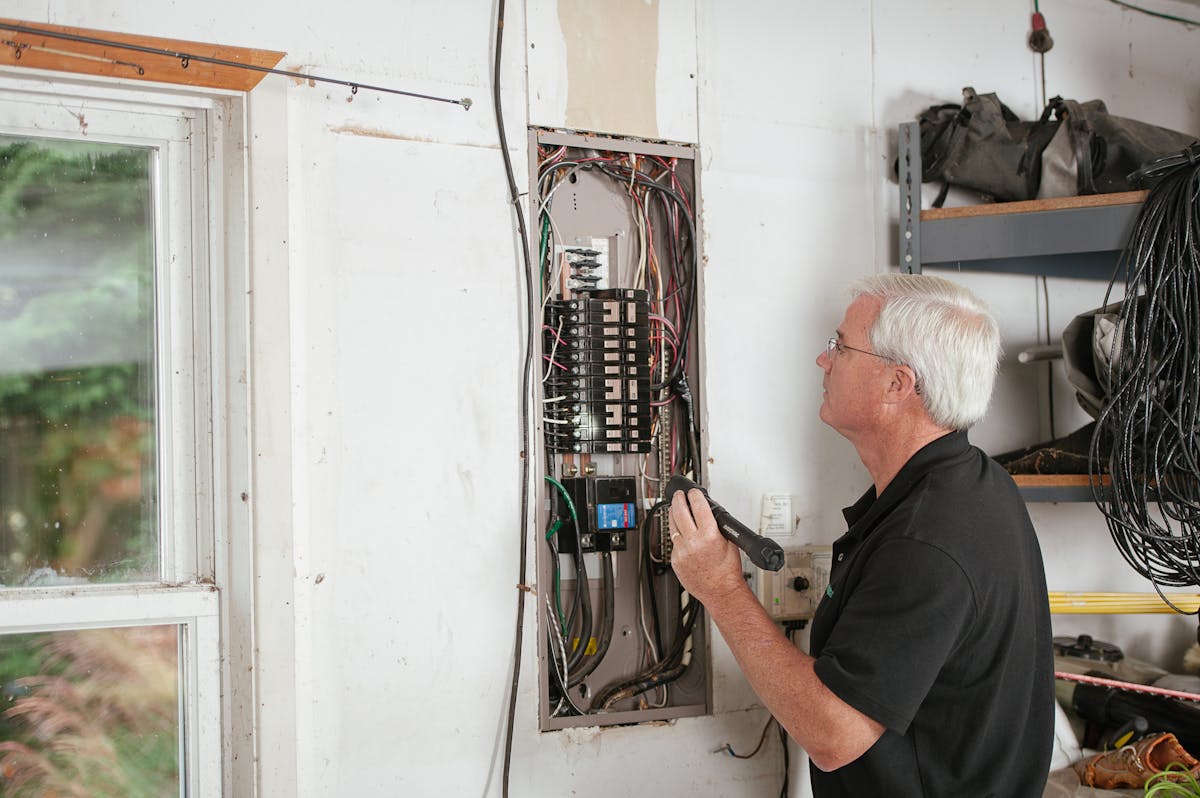
Your breaker box is the one place in your home where every circuit converges — and it's one of the few places where a fire can start inside a closed metal cabinet, out of sight, often while nobody is home. Electrical panel fire suppression is the answer to an uncomfortable truth: smoke detectors only tell you a panel fire has already started, and a handheld extinguisher only works if someone is standing there to use it. This guide explains why breaker boxes ignite, the warning signs to check this week, and how the main protection options — automatic fire suppressors, sprinklers, AFCI breakers, and handheld extinguishers — actually compare for this specific hazard.
Why Electrical Panels Catch Fire
According to the National Fire Protection Association (NFPA), U.S. fire departments respond to roughly 46,000 home fires involving electrical failure or malfunction every year. A meaningful share of those trace back to the service panel itself. The usual ignition sources are specific and worth knowing:
- Loose connections. Breaker lugs and neutral bar screws loosen over years of thermal cycling. A loose connection creates resistance, resistance creates heat, and heat inside a metal cabinet has nowhere to go.
- Arcing faults. Damaged insulation or corroded contacts let current jump an air gap. Arcs run thousands of degrees — hot enough to ignite wire insulation instantly.
- Overloaded circuits. Modern loads (EV chargers, space heaters, workshop tools, e-bike chargers) pushed through panels sized decades ago.
- Legacy panels with known defect histories. Certain older panel brands — Federal Pacific (FPE) Stab-Lok and Zinsco are the most cited — have documented histories of breakers failing to trip under fault conditions.
- Aluminum branch wiring (common in homes wired 1965–1973), which expands, contracts, and oxidizes at terminations.
- Moisture and corrosion in garage, basement, or exterior panels — corroded bus bars are a classic precursor to arcing.
The pattern across all of these: the failure builds quietly inside the cabinet, then ignites when no one is watching. The U.S. Fire Administration notes that a disproportionate share of electrical fires begin in the small hours of the morning — exactly when a manual extinguisher on the wall does nothing.
7 Warning Signs Your Breaker Box Is at Risk
Before you think about suppression, run this five-minute check:
- Warm or hot panel door. A panel should never feel warm to the touch.
- Buzzing, crackling, or sizzling sounds — the sound of arcing.
- Burning or "fish-like" odor near the panel (overheated insulation has a distinctive smell).
- Scorch marks or discoloration on the panel, breakers, or surrounding drywall.
- Breakers that trip repeatedly — or worse, breakers that never trip despite obvious overloads.
- Flickering lights when large appliances start.
- An FPE, Zinsco, or fuse-based panel, or any panel over 40 years old.
Any one of these is a reason to call a licensed electrician. But even a healthy panel deserves protection — loose lugs and arc faults develop silently between inspections.
Electrical Panel Fire Suppression Options Compared
People searching for breaker box fire safety usually weigh four options. They are not interchangeable — each solves a different part of the problem.
| Option | Puts the fire out? | Works unattended? | Safe on live electrical? | Typical cost |
|---|---|---|---|---|
| Automatic fire suppressor (heat-activated, ABC dry chemical) | Yes — discharges at its rated temperature | Yes — no power, no app, no human needed | Yes — dry chem is non-conductive | ~$300 |
| Fire sprinklers | Suppresses, but water on a live panel creates shock hazard and destroys the panel | Yes | No — water conducts electricity | $1–$7 per sq ft installed |
| Handheld ABC extinguisher | Yes — if someone is present, awake, and reacts in time | No | Yes (Class C rated) | $30–$80 |
| AFCI breakers / smoke detectors | No — prevention and alerting only | Yes | N/A | $40–$60 per breaker / $20–$50 per detector |
An honest read of that table: AFCI breakers and smoke detectors are essential and you should have them — they reduce the odds of a fire and buy escape time. But neither extinguishes anything. Sprinklers extinguish, but water and a live 200-amp panel are a terrible combination, and residential sprinkler retrofits cost thousands. A handheld Class C extinguisher is the right tool if you're standing there — see our full guide to Class C fire extinguishers for electrical fires. The only option that both extinguishes the fire and works with nobody home is a heat-activated automatic suppressor mounted at the panel.
If you're shopping for a breaker box solution specifically, see the HAVEN 5lb Automatic Fire Suppressor (135°F rated) — heat-activated ABC dry chemical, no power required, no app needed, made in the USA.
How Automatic Electrical Panel Fire Suppression Works
A heat-activated suppressor like the HAVEN is a sealed unit containing non-toxic, non-conductive ABC dry chemical powder. Mounted on the wall or ceiling above your panel, it does nothing — draws no power, needs no Wi-Fi, requires no monitoring — until the air around it reaches its activation temperature. At that point it discharges automatically and floods the area in seconds, the same agent a firefighter would use on an energized electrical fire.
Three details matter for a breaker box installation:
- Placement. Mount the unit directly above or within a few feet of the panel, so rising heat from the cabinet reaches the trigger quickly. Heat rises — the suppressor should sit in that thermal path.
- Temperature rating. For an indoor utility room or basement panel, the 135°F unit gives the fastest response. For a garage or attic where summer ambient heat runs high, choose the 200°F rated unit to avoid nuisance discharge.
- Coverage. One 5lb unit protects the panel zone. If your panel shares a wall with an EV charger, e-bike charging bench, or workshop circuits, consider a second unit over that hazard.
Breaker Box Fire Safety Checklist
- Have a licensed electrician inspect the panel every 3–5 years (tighten lugs, check for scorching, thermal-scan if available).
- Replace FPE Stab-Lok, Zinsco, or fuse panels — these are inspection-failure panels for a reason.
- Add AFCI protection on bedroom and living-area circuits where code requires it.
- Keep a 3-foot clearance around the panel — no paint cans, cardboard, or shelving.
- Install a smoke detector in the room or hallway serving the panel.
- Mount a heat-activated automatic fire suppressor above the panel.
- Keep a Class C rated handheld extinguisher nearby as a backup — for the fires you do catch in person.
Layered this way, prevention (inspection, AFCI), detection (smoke alarm), and suppression (automatic unit plus handheld backup) cover the three ways a panel fire can play out. For more on ignition data and prevention, the Electrical Safety Foundation International publishes excellent homeowner resources.
FAQ: Electrical Panel Fire Suppression
Can I use water or a sprinkler on a breaker box fire?
No. Water conducts electricity — spraying a live panel risks electrocution and turns a contained fire into an electrical casualty event. Use only non-conductive agents (ABC dry chemical or CO2) on energized equipment.
Will a dry chemical discharge ruin my electrical panel?
Dry chem residue requires cleanup and the panel should be inspected afterward — but compare that to the alternative: a panel fire that reaches the wall framing typically means a rebuilt wall, if not a lost home. Insurance adjusters see this trade-off weekly.
Does an automatic suppressor need power or Wi-Fi?
No. The HAVEN is purely mechanical and heat-activated — which matters, because panel fires often begin by killing power to the very circuits a powered system would depend on.
Is this a substitute for an electrician?
No. Suppression is the last layer, not the first. If your panel shows any warning sign above, the electrician comes first.
What temperature rating should I choose?
135°F for climate-controlled indoor spaces; 200°F for garages, attics, and anywhere ambient temperatures spike.
Protect your panel before the fault finds it
HAVEN Automatic Fire Suppressors are heat-activated, made in the USA, and need no power, no plumbing, and no app. Mount one above your breaker box in minutes.